Best Currency Exchange Rates in Glasgow: Cash, Cards and ATMs
A practical guide to spending and exchanging money in Glasgow, including Scottish notes, Subway payments, cards, cash, ATMs and live pound comparisons.
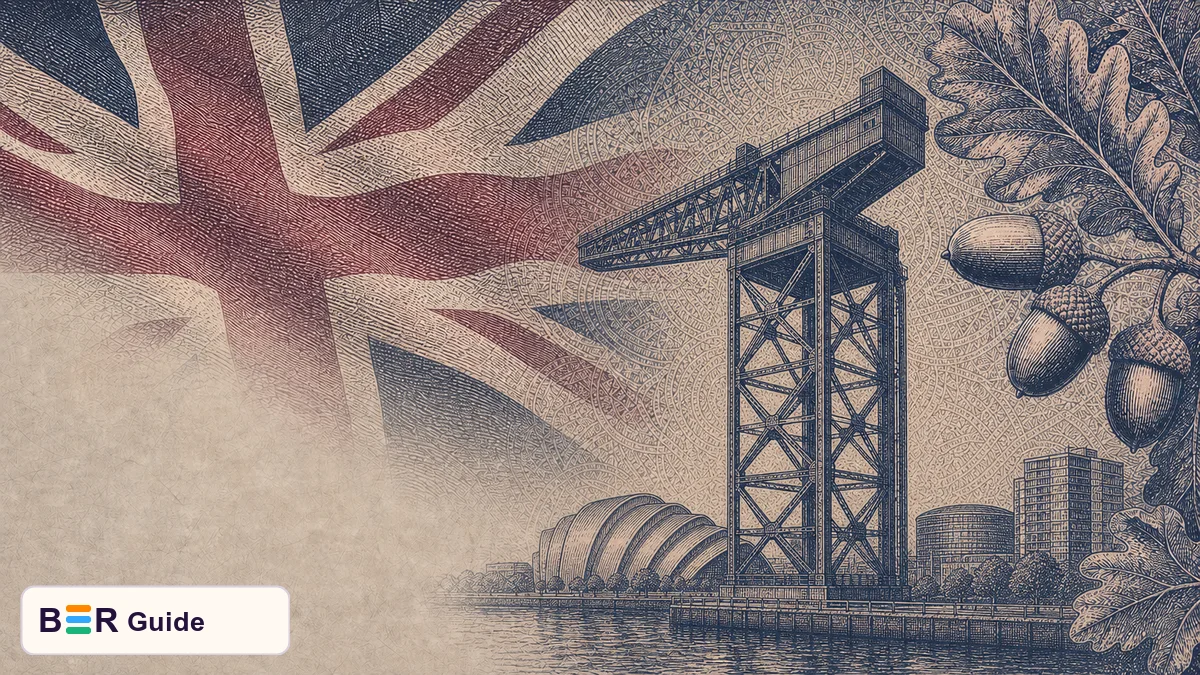
Glasgow travel money guide · Updated July 2026
Use a card for most spending and understand Scottish notes
Glasgow is easy to navigate without carrying a large amount of cash. Contactless payment is common across the city centre, West End, Finnieston and major attractions. A small sterling cash reserve is still useful for independent stalls, a card problem or places that set a minimum spend.
The quick answer
Compare your existing bank card with a low-cost travel account such as Wise or Revolut before leaving home. Use pounds sterling when a terminal asks which currency to charge, and withdraw only the cash you are likely to use.
Choose by situation
A practical payment mix for Glasgow
Check your card's foreign-transaction fee, cash-withdrawal charge and conversion limits. A familiar bank card is convenient, but repeated overseas fees can make it expensive.
Shops, restaurants and attractions
Low-fee contactless card
Cards and mobile wallets suit most everyday purchases. Keep a second card separate so one lost, blocked or damaged card does not stop your trip.
Subway journeys
Contactless pay as you go
Glasgow Subway accepts contactless cards and mobile wallets at its gates. Use the same card or device to tap in and out so daily or weekly capping can be calculated.
Markets and backup
A small amount of sterling
Cash may be useful around independent markets or when a payment terminal is offline. Avoid carrying more than you expect to spend.
Rent, tuition or a large bill
Online sterling transfer
For a larger GBP payment, compare the final pounds delivered by transfer providers rather than paying by foreign card or carrying cash.
A Glasgow-specific detail
Scottish banknotes are sterling—but acceptance can vary
Scottish banks issue their own sterling notes. They are routinely used in Glasgow, but the Bank of England explains that Scottish banknotes are not legal tender, even in Scotland. “Legal tender” also does not mean a retailer must accept a particular note.
01
Fine for spending in Glasgow
Scottish £5, £10 and £20 notes are familiar to local retailers. Check your change as you would anywhere else.
02
Less familiar farther away
Some businesses elsewhere in the UK may hesitate over Scottish notes. If Glasgow is your final Scottish stop, spend smaller notes before travelling on.
03
Foreign bureaux may not buy them
If you will exchange leftover sterling after returning home, Bank of England notes may be easier for a foreign exchange counter to recognise.
Getting around
Match the payment method to the transport
Glasgow introduced contactless pay as you go at all Subway stations in March 2026. Bus and rail payment arrangements can differ by operator, so check the service you plan to use rather than assuming one citywide cap.
Subway essentials
Tap carefully
- Use the same card or device. A physical card and that card in a phone wallet are treated as different payment methods.
- One person per contactless card. SPT says groups using one payment card should instead buy tickets from a machine or ticket office.
- Check overseas fees. A card issuer may charge for each sterling transport transaction.
- Keep another payment method. Carry a backup card or enough cash to buy a ticket if your main card is declined.
At a glance
Compare ways to get and spend pounds in Glasgow
| Method | Useful for | Check before using | Glasgow tip |
|---|---|---|---|
| Wise or Revolut | Card spending, conversion and some ATM withdrawals | Fees, plan allowances, weekend pricing and ATM limits | Compare Wise and Revolut with your bank. |
| Your bank card | Contactless spending and transport | Foreign-purchase and cash-withdrawal fees | A fee-free card may already be a good solution. |
| Bank ATM | A modest cash withdrawal | Issuer fee, operator fee and conversion prompt | Choose GBP unless you deliberately accept the ATM's displayed home-currency conversion. |
| Exchange bureau | Converting foreign banknotes | Final GBP received after the rate and every charge | Compare city quotes rather than relying on the first airport offer. |
Avoid common costs
Before using an ATM or exchange counter
Ignore “0% commission” on its own
The exchange-rate margin can cost more than a visible fee. Compare the pounds you actually receive.
Read conversion prompts
If an ATM or terminal offers your home currency, review the rate and markup. Paying in GBP leaves conversion to your card network and issuer.
Avoid surplus coins
Coins are difficult to exchange after a trip. Withdraw small amounts and use remaining change before departure.
Live market context
How has the British pound been moving?
This shows recent GBP movement against major currencies. It is a market reference, not the customer rate guaranteed by a card, ATM or bureau.
Live travel money rates
Compare current rates for buying British pounds
Use this short live table as a starting point, then confirm the final quote, fees, limits and delivery or collection terms.
Loading exchange rates...
|
|
|
||
|
|
|
||
|
|
|
||
|
|
|
Bottom line
Card first, with a sterling backup
For most Glasgow visitors, a low-fee card plus a small amount of cash is more practical than exchanging the whole budget. Remember that Scottish notes are normal locally, but may be less convenient once you leave Scotland.
Sources and further reading
Disclaimer: Please note any provider recommendations, currency forecasts or any opinions of our authors should not be taken as a reference to buy or sell any financial product.