Canadian Dollar Guide (CAD): Rates, Travel & Money Transfers
Learn how the Canadian dollar works, what moves CAD exchange rates and how travellers, expats and businesses can compare conversion costs.
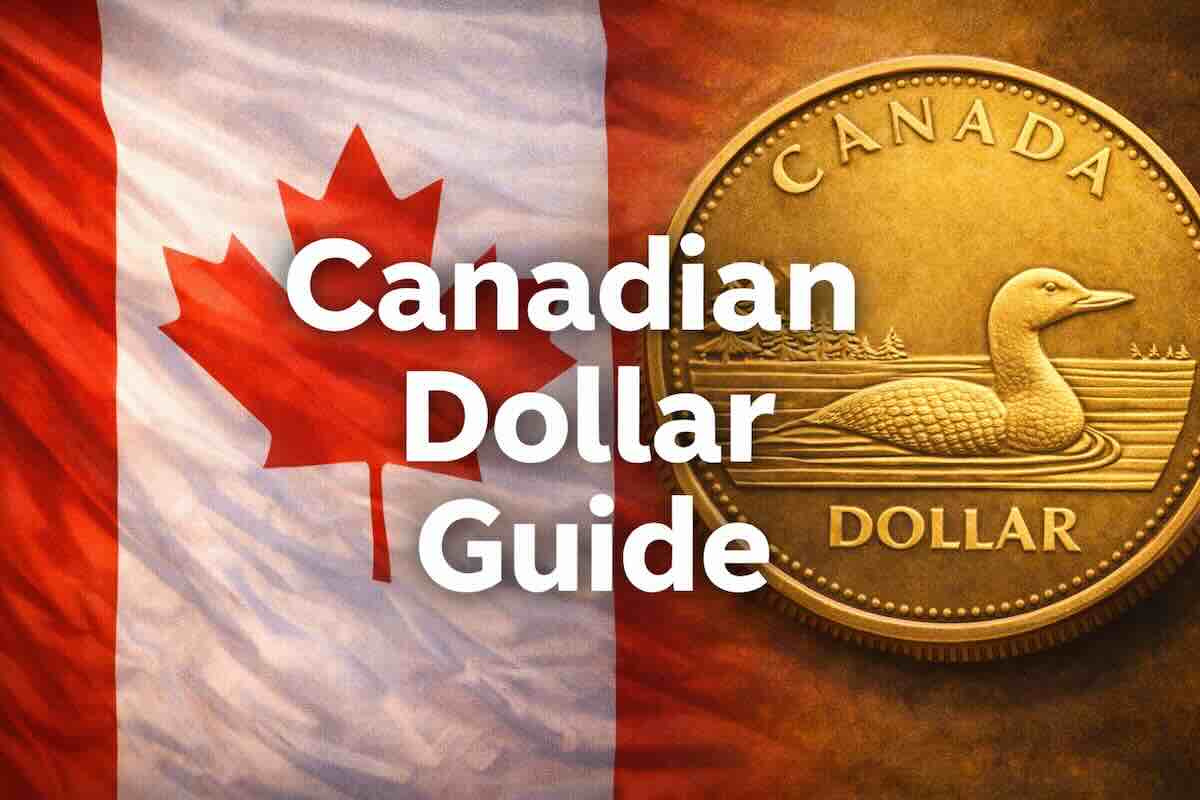
The Canadian dollar (CAD), nicknamed the loonie after the bird shown on the one-dollar coin, is Canada's official currency. It is actively traded around the world and is especially important for trade, travel and money transfers between Canada and the United States.
If you are travelling to Canada, moving money across the border or managing business payments in CAD, the headline exchange rate is only part of the cost. The provider's exchange-rate margin, transfer fee and any receiving-bank charge can all affect how much money arrives.
Canadian Dollar Quick Facts
- Currency code: CAD
- Currency symbol: $ or C$ when it needs to be distinguished from other dollars
- Central bank: Bank of Canada
- Coins: 5¢, 10¢, 25¢, $1 and $2
- Banknotes: $5, $10, $20, $50 and $100
- Exchange-rate system: Floating; the market generally determines CAD's value
Canadian Dollar Performance vs Major Currencies
There is no single answer to whether CAD is strong or weak. It may rise against one currency while falling against another, so check the pair that matches your payment or travel budget.
The live comparison below shows how the Canadian dollar has performed against major trading and travel currencies over the past 12 months.
You can also view live Canadian dollar exchange rates and open an individual pair for charts, forecasts and provider comparisons.
Canadian Dollar Pairs to Watch
- USD/CAD — the main cross-border pair, influenced by US–Canada trade, relative interest rates and broad US-dollar moves
- CAD/USD — useful for Canadians buying US dollars or paying US expenses
- EUR/CAD — relevant to trade and travel between Canada and the euro area
- GBP/CAD — sensitive to Canadian and UK interest-rate expectations
- AUD/CAD — compares two currencies associated with commodity-exporting economies
Remember that reversing a pair changes the quote. USD/CAD shows how many Canadian dollars buy one US dollar; CAD/USD shows how many US dollars buy one Canadian dollar.
What Moves the Canadian Dollar?
Bank of Canada and US interest rates
Markets compare expected returns on Canadian and US assets. A change in the gap between Bank of Canada and Federal Reserve interest rates can alter demand for CAD, although exchange rates rarely respond to one factor alone.
The US economy and cross-border trade
The United States is Canada's largest trading partner. US demand, trade policy and the outlook for North American growth can therefore have a significant effect on Canadian businesses and the dollar.
Oil and other commodities
Canada exports energy, metals and other raw materials. Higher commodity prices can support Canadian export income and CAD, while falling prices can weigh on it. The relationship is not automatic: supply shocks, risk sentiment and US-dollar moves can sometimes matter more.
Global market sentiment
During uncertain periods, investors often favour highly liquid defensive assets, particularly the US dollar. CAD can weaken in those episodes, but the result depends on what is driving the uncertainty and how oil and interest-rate expectations respond.
How to Get a Better CAD Exchange Rate
The mid-market rate is a useful benchmark, but it is not normally the rate offered to a retail customer. A bank, card issuer or transfer provider may add a margin and separate fees.
Before converting money:
1. Compare the customer rate with the mid-market rate at the same time.
2. Check the transfer fee, card surcharge and possible intermediary or receiving-bank fees.
3. Compare the final amount received, not a "zero fee" claim in isolation.
4. Confirm the delivery method and estimated arrival time.
5. For a large or recurring payment, consider whether staged transfers, a rate alert or an available risk-management tool suits your needs.
The calculator and comparison table below estimates the total cost of exchanging CAD with available providers.
Quoted rates and fees can change. Check the provider's final quote before confirming a transaction.
Using Canadian Dollars in Canada
Cards and contactless payments are widely used, but carrying a small amount of cash can still be useful for tips, small purchases or situations where electronic payment is unavailable. A merchant can choose which payment methods it accepts, even though current Canadian notes and coins are legal tender.
When a terminal offers to charge your home currency instead of CAD, compare the displayed conversion before accepting. This service, known as dynamic currency conversion, lets the merchant or its payment provider set the exchange rate. Paying in CAD usually leaves the conversion to your card network and issuer, but your card's foreign-transaction fee still matters.
Before travelling, check your card's overseas fees, ATM charges and withdrawal limits. If an ATM offers its own conversion, review both options rather than assuming the displayed home-currency amount is better.
Sending Money To or From Canada
CAD transfers are common for migration, pensions, property, tuition, supplier invoices and cross-border payroll. The cheapest suitable option can vary with the amount, destination, payment method and required delivery speed.
Banks may be convenient, while specialist transfer providers may offer different rates, fee structures or payment tools. Always compare like for like and check whether the recipient needs an exact CAD amount.
Compare transfer options in our guide to sending money to Canada.
Is the Canadian Dollar Stable?
CAD is a liquid, freely floating major currency, but that does not mean its value is fixed. It can move materially when Canadian and US rate expectations diverge, commodity prices change or markets reassess trade and global growth.
For travellers, expats and businesses, forecasting the perfect exchange rate is difficult. A more practical approach is to compare the full cost, set a target budget and manage the timing risk of large payments rather than relying on a single market prediction.
Sources and Methodology
This guide uses the Bank of Canada's explanation of exchange rates, its information on Canadian legal tender and the BIS foreign-exchange turnover survey for currency-market context. Performance modules and comparison tables use live BER data and may update independently of the article text.
Disclaimer: Please note any provider recommendations, currency forecasts or any opinions of our authors should not be taken as a reference to buy or sell any financial product.