Biggest Currency Movers – July 2026
The New Zealand dollar led July’s G10 gains after an RBNZ rate hike, while softer U.S. inflation weighed on the dollar and left the euro at the bottom of the major-currency table.
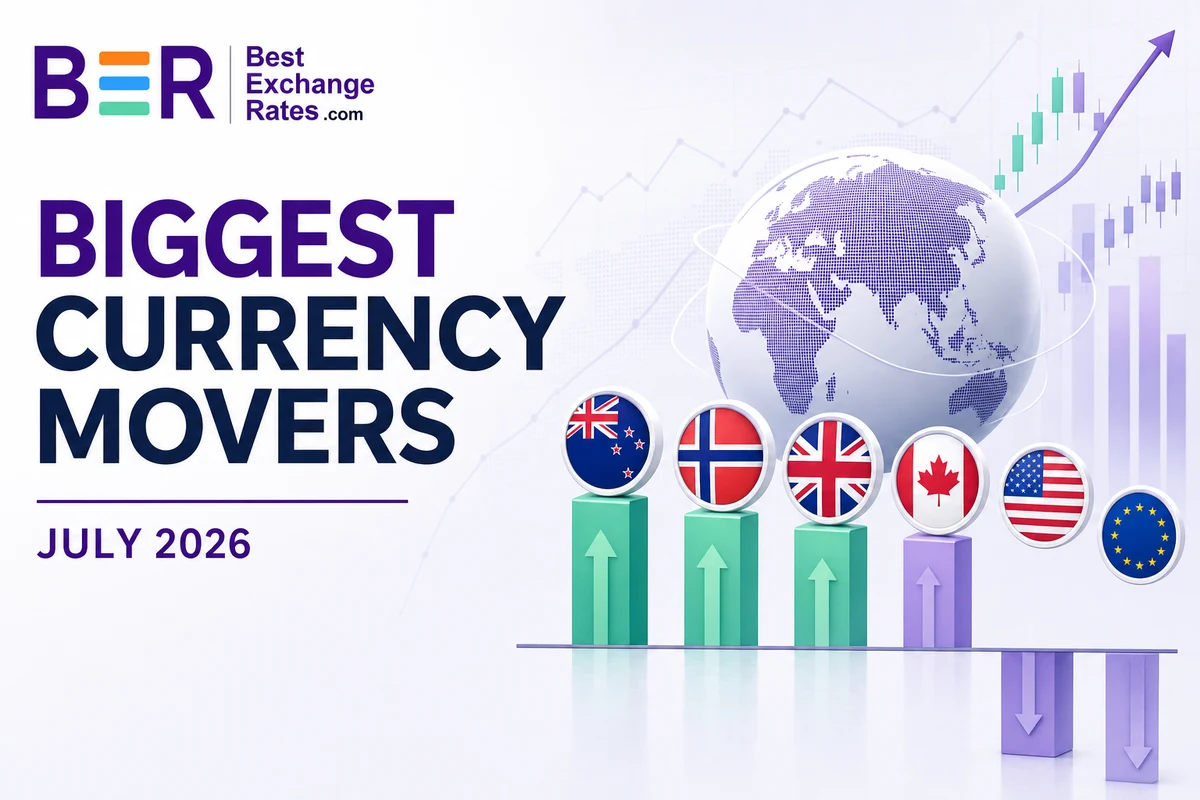
Biggest Currency Movers in July
July has produced a broad recovery in currencies against the U.S. dollar. The New Zealand dollar has led the major-currency pack after the Reserve Bank of New Zealand raised interest rates, while the Norwegian krone, British pound and Canadian dollar have also recorded solid gains.
The figures below compare ECB reference rates from 30 June to 17 July 2026, the latest completed trading day at the time of writing.
G10 Currency Performance vs USD in July
| Rank | Currency | July change vs USD* | Main driver |
|---|---|---|---|
| 1 | New Zealand dollar (NZD) | +3.06% | RBNZ rate hike and expectations of further tightening. |
| 2 | Norwegian krone (NOK) | +2.83% | Higher oil prices and improved demand for commodity currencies. |
| 3 | British pound (GBP) | +1.63% | Fading UK fiscal concerns and a softer U.S. dollar. |
| 4 | Canadian dollar (CAD) | +1.52% | Rising oil prices and a narrower Canada–U.S. yield gap. |
| 5 | Australian dollar (AUD) | +1.28% | Three weeks of gains as the greenback softened. |
| 6 | Swedish krona (SEK) | +0.84% | Broad gains among European currencies outside the euro. |
| 7 | Swiss franc (CHF) | +0.32% | Safe-haven demand offset by its relatively low yield. |
| 8 | Japanese yen (JPY) | +0.05% | Recovered from a 40-year low but remained constrained by wide yield gaps. |
| 9 | U.S. dollar (USD) | 0.00% | Cooling inflation reduced expectations of near-term Fed rate hikes. |
| 10 | Euro (EUR) | −0.36% | Lagged the broader rebound despite late-month USD softness. |
- Performance is the change in each currency’s U.S. dollar value between the ECB reference rates for 30 June and 17 July 2026. Rates are indicative only and may differ from provider quotes. Compare live exchange rates.
Biggest Gainers
New Zealand Dollar (NZD)
The New Zealand dollar was July’s standout G10 performer, rising about 3.1% against the U.S. dollar by 17 July. The RBNZ lifted its Official Cash Rate by 25 basis points to 2.50% on 8 July and signalled that tighter policy may still be required to return inflation to target. The surprise helped NZD/USD recover from early-month weakness and reach its strongest area in roughly a month.
Follow NZD to USD and USD to NZD.
Norwegian Krone (NOK)
The Norwegian krone gained about 2.8% against the dollar. Higher oil prices supported the currency as renewed U.S.–Iran hostilities lifted the energy-market risk premium. The move also reflected the wider rebound in commodity-linked currencies as U.S. rate expectations eased.
Track NOK to USD and USD to NOK.
British Pound (GBP)
Sterling rose about 1.6% against the dollar and reached a one-year high against the euro during July. The pound benefited from fading concerns over Britain’s fiscal outlook and expectations that the incoming prime minister would favour a fiscally conservative finance minister. Softer U.S. jobs and inflation data added to the move.
Follow GBP to USD and EUR to GBP.
Biggest Laggards
Euro (EUR)
The euro was the weakest G10 currency over the measurement period, slipping about 0.4% against the dollar. Although EUR/USD recovered as the greenback softened in mid-July, it did not erase its early-month decline and the euro underperformed sterling and the commodity currencies.
See EUR to USD and USD to EUR.
U.S. Dollar (USD)
The dollar moved from early-month resilience to a softer tone after tame U.S. inflation data reduced expectations of an imminent Federal Reserve rate hike. The dollar index was near a one-month low by mid-July, although safe-haven demand linked to renewed Middle East tensions limited the decline.
See BER’s US Dollar Index and USD exchange rates.
The live Dollar Index chart below adds historical context to the fixed 30 June–17 July comparison used in this article. It will continue to update after the article's observation date.
Japanese Yen (JPY)
The yen ended almost unchanged against the dollar but still lagged most of the G10. USD/JPY touched a 40-year high near 162.84 early in July before retreating, keeping intervention risk in focus. Wide U.S.–Japan yield gaps continued to limit the yen’s recovery.
Track USD to JPY and JPY to USD.
What Drove FX Markets in July?
- The RBNZ raised its cash rate to 2.50%, giving the New Zealand dollar a clear yield-driven boost.
- Softer U.S. employment and inflation data reduced expectations of an imminent Fed rate hike and weakened the dollar.
- Renewed U.S.–Iran hostilities lifted oil prices, supporting the Canadian dollar and Norwegian krone while maintaining safe-haven demand.
- UK political and fiscal concerns eased, helping sterling outperform both the dollar and euro.
- The yen’s slide to a four-decade low kept the risk of official Japanese intervention in view.
What This Means for You
- New Zealand travellers and importers face a better buying rate for U.S. dollars than at the end of June, although RBNZ expectations can still drive sharp reversals.
- USD senders may receive fewer New Zealand dollars, Norwegian kroner, pounds and Canadian dollars than they did at the start of July.
- Businesses with oil-sensitive payments should watch both energy prices and CAD or NOK rates as Middle East headlines continue to move markets.
- Anyone transferring money internationally should compare the customer rate and total fees, not just the headline market rate.
Tip: Exchange rates and provider margins can move quickly around central-bank decisions and geopolitical headlines. BER’s live comparison tools and rate alerts can help you monitor the rate that matters for your transfer.
Data Notes
Percentage moves are calculated from European Central Bank euro reference rates for 30 June and 17 July 2026, converted into each currency’s U.S. dollar value. Market context draws on central-bank statements and Reuters market reports available through 17 July. Figures are rounded to two decimal places.
Disclaimer: Please note any provider recommendations, currency forecasts or any opinions of our authors should not be taken as a reference to buy or sell any financial product.