Currency in Belgium: EUR Send & Spend FX Guide
 Resources for Expats, Travelers and Entrepreneurs Navigating Life and Trade in Belgium with the euro.
What's in this Belgium currency guide?
What currency is used in Belgium?
The official currency of Belgium (country code: BE) is the euro, with symbol € and currency code EUR.
What is a good euro exchange rate?
The BestExchangeRates.com currency comparison table below helps you see the total cost of your currency transaction by showing the exchange rates offered by different providers. It also makes it easy to spot potential savings from market-leading FX services compared to bank rates.
To see a full list of rates, enter your transaction type, currencies and amount then click ‘GET RATES’:
Loading rates...
|
|
|
Good things to know about the euro
The euro (ISO: EUR) is involved in slightly more than 30% of all foreign exchange deals, and as such, is the world’s second most traded currency, behind the US dollar.
The euro is the currency of the eurozone (officially called the ‘euro area’), which consists of 19 of the 28 member states of the European Union, and is used by almost 350 million Europeans. It was introduced in January 1999.
Of all the thousands of exchange rates that exist in the world, the euro-to-US dollar exchange rate is the most actively traded, or most ‘liquid’.
Since its introduction, the euro’s lowest value against the dollar came in October 2000 when EUR/USD hit lows of 0.8231. The currency was strongest in July 2008, shortly before the worst stage of the 2007-2009 financial crisis, when EUR/USD reached 1.6038.
There are currently more than twenty nations and territories which peg their currencies to the euro, the largest of which is Denmark.
The euro banknotes and coins
The Euro is issued in banknotes of €5, €10, €20, €50, €100, €200, and €500, and in coins of 1 cent, 2 cents, 5 cents, 10 cents, 20 cents, 50 cents, €1, and €2.
The banknotes feature images of historical and cultural figures from across the European Union, while the coins depict each member country's unique design. The design of the Euro banknotes and coins is intended to be easily identifiable and difficult to counterfeit.
For more EUR information check out our selection of euro news and guides.
Frequently Asked Questions
What currency should I use in Belgium?
The domestic currency in Belgium is the euro.
What is the euro currency code and symbol?
The three letter currency code for the euro is EUR — symbol is €.
What does the euro look like?
Here is an example euro banknote:

Which countries use the euro?
It is the domestic currency in Eurozone, Aaland Islands, Andorra, Austria, Belgium, Bulgaria, Croatia, Cyprus, Estonia, Finland, France, French Guinea, French Southern Territories, Germany, Greece, Guadeloupe, Vatican City, Ireland, Italy, Latvia, Lithuania, Luxembourg, Malta, Martinique, Mayotte, Monaco, Montenegro, Netherlands, Portugal, Reunion, Saint Barthelemy, Saint Martin, Saint Pierre and Miquelon, San Marino, Slovakia, Slovenia and Spain.
Is the euro a closed currency?
No, the euro is freely available and convertible. See guide: What is a closed currency?
What are equivalent amounts of USD and EUR?
Here are some popular conversion amounts for USD to EUR (US dollar to euro)*.
*Converted at the current USDEUR interbank exchange rate. Calculate actual payout amounts for Send Money and Travel Money exchange rates.
Travel money for Belgium
Using Wise for euro travel money is a smart choice for savvy travelers. With its competitive exchange rates and low fees, Wise allows you to convert and manage multiple currencies effortlessly.
Be careful when using your own bank's Debit/Credit Card, as your bank may also charge an extra 3% as an “Overseas Transaction Charge” plus “Overseas ATM” fees for withdrawing cash on top of the standard Visa/Mastercard 2.5% from market mid-rate.
For card purchases, if you are offered a choice of currencies always select to Pay in euro otherwise you will typically get much worst dynamic currency conversion (DCC) exchange rates.
If you really want euro cash before departure, you can save money by ordering online. You generally get better rates and can pick up the EUR cash locally or even on travel day at the airport.
Belgium: Travel Guide
Traveling to Belgium requires careful financial planning to ensure a smooth and cost-effective experience. Here's a comprehensive guide to help you navigate currency considerations and manage your money effectively during your visit.
Belgium is a country located in Western Europe, bordered by the Netherlands to the north, Germany to the east, Luxembourg to the southeast, France to the southwest, and the North Sea to the northwest. It is a federal parliamentary democracy with a constitutional monarchy and a population of around 11 million people. The official languages are Dutch, French, and German, and the currency is the Euro.
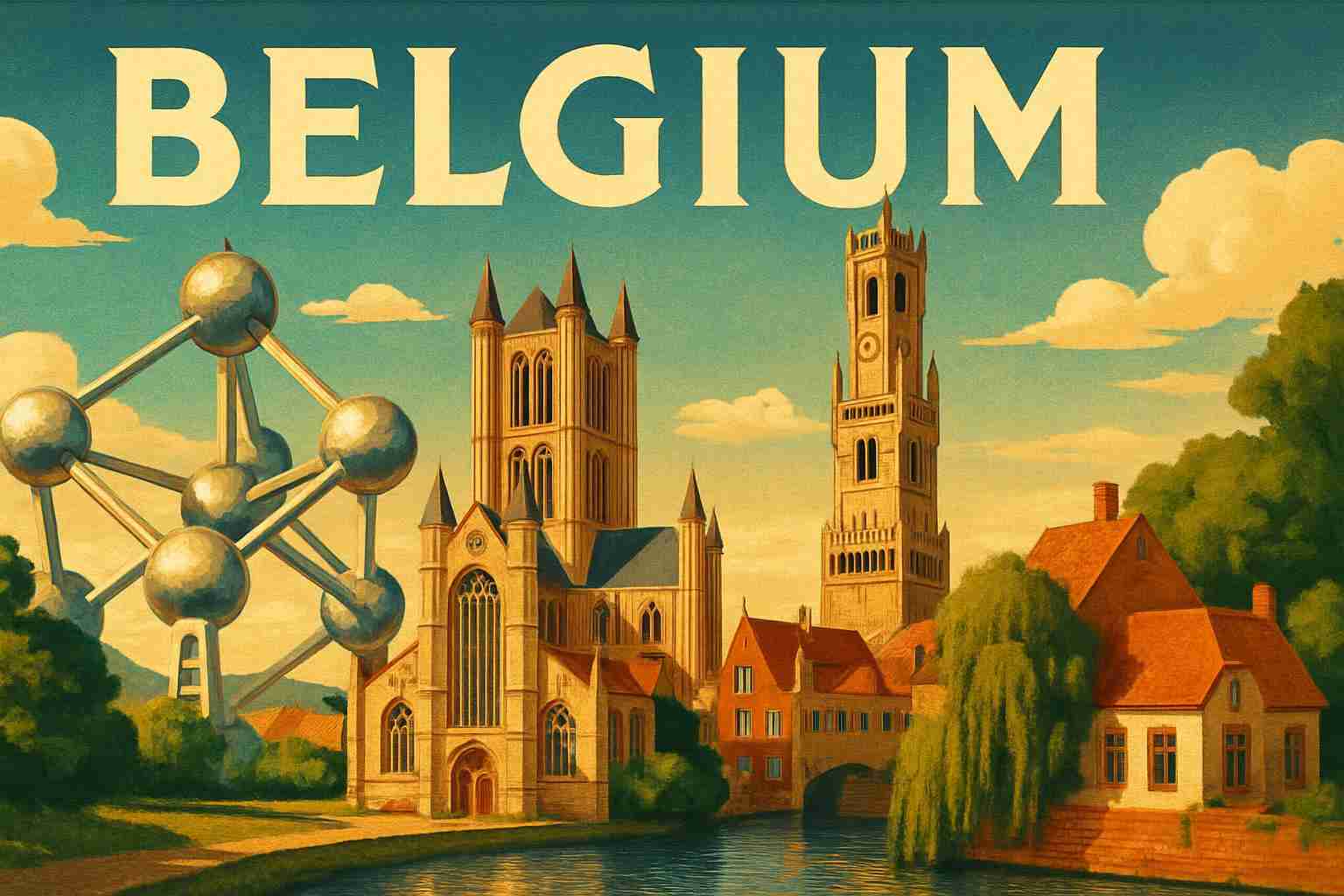
Belgium is known for its rich cultural heritage, with a long history and a diverse range of influences. The country is home to a number of world-famous landmarks, including the Atomium, the medieval town of Bruges, and the Grand Place in Brussels. Belgium is also known for its cuisine, including dishes such as waffles, fries, and chocolate.
The economy of Belgium is highly developed and is based on services, manufacturing, and trade. The country is a member of the European Union and is home to a number of international organizations, including the European Union and NATO. Belgium is also home to a number of large multinational corporations, and its port of Antwerp is one of the busiest in Europe.
Everyday Costs in in Belgium
How much does it really cost to live, work, or travel in Belgium? Here's what to expect for daily expenses and expat living.
Currency Guide for Belgium (ISO Code: BE)
For a moderate one-week stay in Belgium, travelers should budget approximately €800 to €1,200, depending on personal spending habits and travel style. Here’s a brief overview of typical daily expenses in euros (€):
- 🍽️ Meal at a local restaurant: €15-€30
- ☕ Coffee: €2.50-€5
- 🚍 Public transport fare: €2.50
- 📱 Prepaid SIM card: €20-€30
- 🏨 Budget hotel or Airbnb: €70-€150 per night
Overall, Belgium is considered an average destination in terms of cost compared to other European countries. When compared to the United States, travelers may find Belgium moderately expensive given the lower costs of meals and public transport in some cities. However, when measured against the UK—particularly London—Belgium often presents a more affordable option, especially for dining and accommodation.
Living Costs and Financial Tips for Expats in Belgium
Expats looking to settle in Belgium can anticipate a monthly living cost ranging from €1,800 to €2,500, depending largely on the city and lifestyle choices. This is inclusive of rent, utilities, groceries, transportation, and leisure activities. To navigate finances in Belgium efficiently, it’s advisable to use local banking services that offer competitive rates on international transactions. Most vendors accept credit and debit cards, though travelers should be wary of potential foreign transaction fees.
When it comes to exchanging currencies, using online money transfer services like Wise or OFX can often yield better exchange rates and lower fees compared to traditional banks or currency exchange outlets. Nonetheless, exchanging a small amount of cash locally can be useful for immediate needs. It’s wise to carry some euros for small purchases, while utilizing digital solutions for larger transactions is generally more economical.
USD/EUR Market Data
The below interactive chart displays the USD/EUR change and UP📈 DOWN📉 trends over the past 1 Year.
Recent euro Market News
EUR Weekly Market Update
Updated 18 Jul 2026 • 23:46 GMT
European inflation easing to 2.8% has supported the ECB's decision to pause interest rate hikes, with the possibility of a renewal in September still open. ECB President Lagarde highlighted the resilience of Europe, maintaining a cautious stance on future rate decisions. Geopolitical tensions in the Middle East, particularly around the Strait of Hormuz, have led to increased demand for safe-haven currencies, pressuring the euro.
Key watchpoints:
- Monitor ECB's upcoming meeting on July 23 for rate guidance.
- Observe ongoing geopolitical developments affecting risk sentiment.
- Track EUR/USD movements, especially in relation to US monetary policy changes.
For more EUR information read our News and guides to the euro.
Send Money to Belgium - Best Rates
To get a good (and fair) exchange rate when sending money to Belgium you need to find and compare exchange rates for International Money Transfers (IMTs).
The available FX rates for sending money abroad can be very different to the mid-market (wholesale) rate which you see reported online and in the News.
You should especially compare your own bank's exchange rates to those available from Money Transfer specialists to see how much you can save - we make that calculation easy in the below table.
Get a better deal for foreign transfers to Belgium
When sending money to Belgium it’s important to compare your bank’s rates & fees with those we have negotiated with our partner money transfer providers. To get a better deal you should follow these 4 simple steps :
- Open an account with a BER reviewed FX provider (id docs may be required)
- You specify the local or euro amount you want to transfer
- Make a local currency domestic transfer for the requested amount to the provider's bank account in your country
- Once your funds are received by the provider the converted EUR amount will be transfered to the recipient account you specify in Belgium.
Use the above calculator to compare the exchange rates of FX specialist providers rates versus your bank's standard rates you can hopefully save around 5% and maybe more - end result is more euro deposited into the recipient bank account and less margins and fees kept by the banks!
Managing money while living and working in Belgium
Managing your money effectively while living and working abroad can be challenging, but there are several steps you can take to ensure that your finances are in order.
Understand Euro currency exchange rates: Exchange rates can have a big impact on your finances, so it is important to keep an eye on the EUR exchange rate and consider using a money transfer specialist or a credit card that does not charge foreign transaction fees to get the best exchange rate.
Use a local Euro bank account: A local EUR bank account can make it easier for you to manage your finances and pay bills while you are in Belgium. It may also be more convenient to use a local EUR bank account to make purchases and withdraw cash.
Research local laws and regulations: It is important to understand the local laws and regulations that apply to financial transactions in Belgium. This can help you avoid legal issues and ensure that you are complying with local requirements.
Consider the tax implications: It is important to understand the tax implications of living or doing business in Belgium. This can help you plan your finances and ensure that you are paying the correct amount of tax.
Seek financial advice: If you are unsure of how to manage your finances in Belgium, it is a good idea to seek the advice of a financial professional who is familiar with the local financial system. This can help you make informed decisions and avoid financial pitfalls.
We have put together some key points to help managing your money effectively, you can reduce financial stress and enjoy your experience living or doing business in Belgium.
Is Belgium an expensive country to live in?
Belgium is generally considered to be a relatively expensive country to live in compared to some other countries in Europe and around the world. The cost of living in Belgium can vary depending on the city you are in, but in general, prices for goods and services such as housing, food, and transportation can be higher in Belgium than in some other countries.
Factors that contribute to the higher cost of living in Belgium include high salaries, a high standard of living, and a strong economy. That being said, it is possible to find ways to save money and live affordably in Belgium, particularly if you are willing to make certain sacrifices or adjustments to your lifestyle.